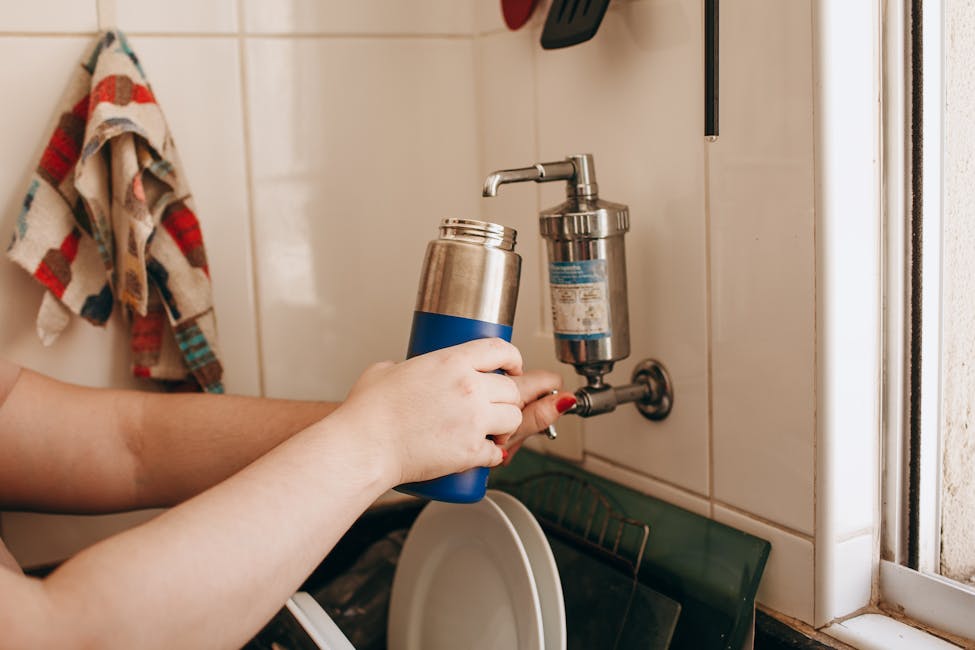
A 2023 U.S. Geological Survey study found PFAS in 45% of US tap water samples — including well water. The EPA's 2024 PFAS rules set maximum contaminant levels of 4 parts per trillion for PFOA and PFOS. Many utilities are still working to comply. For most households, point-of-use filtration is the most practical way to reduce PFAS in drinking water right now.
Which Filter Technologies Actually Remove PFAS?
Reverse Osmosis — Most Effective
Reverse osmosis (RO) forces water through a semi-permeable membrane that physically excludes PFAS molecules. A quality RO system removes 90-99%+ of most PFAS compounds. NSF/ANSI 58-certified RO systems are tested specifically for PFOA and PFOS reduction.
Activated Carbon Block Filters — Very Effective (With Caveats)
High-density carbon block filters adsorb PFAS compounds through chemical bonding. They work well for most long-chain PFAS (PFOA, PFOS, PFNA) but are less effective for short-chain PFAS compounds. The key is filter quality and contact time — cheap carbon filters with high flow rates don't work as well.
Standard Pitcher Filters (Brita, PUR basic models) — Inadequate
Standard granular activated carbon (GAC) pitcher filters reduce some PFAS but not reliably or completely. Contact time is too short and the carbon too coarse for consistent PFAS reduction. Don't rely on a basic Brita for PFAS removal.
Best Water Filters for PFAS in 2026
Clearly Filtered Pitcher — Best PFAS Pitcher Filter
Clearly Filtered Water Filter Pitcher
Clearly Filtered stands out because it publishes actual third-party lab results for PFAS removal — not just NSF certification claims. Their pitcher filter is tested to remove 99.5%+ of PFOA, PFOS, and dozens of other PFAS compounds. This is unusually transparent data for the water filter industry.
- ✅ Third-party lab-verified 99.5%+ PFAS removal
- ✅ Removes 365+ contaminants
- ✅ No installation required
- ✅ Publishes lab results openly
- ❌ Slower flow rate than standard pitchers
- ❌ Higher filter replacement cost (~$50/filter)
- ❌ Filters 100 gallons (need replacement every 2-4 months)
~$90 (pitcher), ~$50 (replacement filters)
Shop Clearly Filtered →Berkey Water Filter — Best Countertop Gravity Filter
Berkey Water Filtration System
Berkey systems use a gravity-fed carbon block filtration process that effectively reduces many PFAS compounds along with a wide range of other contaminants including bacteria and heavy metals. No electricity or plumbing required. Note that Berkey does not currently hold NSF certification, which is a meaningful gap — but their independent test results are published for review.
- ✅ No electricity or installation needed
- ✅ Very high capacity (2.75 gallons in Big Berkey)
- ✅ Long filter life (3,000 gallons per filter pair)
- ✅ Removes bacteria, heavy metals, VOCs, and many PFAS
- ❌ Not NSF certified
- ❌ Slow filtration rate (gravity-fed)
- ❌ Large countertop footprint
~$283–$388 (Big Berkey and Royal Berkey)
Shop Berkey →APEC ROES-50 Reverse Osmosis — Best Under-Sink RO
APEC ROES-50 5-Stage Reverse Osmosis System
A 5-stage reverse osmosis system with NSF/ANSI 58 certification. The RO membrane removes 90-99% of PFAS, along with arsenic, nitrates, fluoride, and hundreds of other contaminants. Under-sink installation provides filtered water on demand without the slowness of a gravity pitcher.
- ✅ NSF/ANSI 58 certified
- ✅ 90-99% PFAS removal via RO membrane
- ✅ 50 gallons per day capacity
- ✅ Removes wide spectrum of contaminants
- ❌ Requires under-sink installation
- ❌ Wastes 3-4 gallons of water per gallon filtered
- ❌ Removes beneficial minerals (remineralization filter optional)
~$200–$250
Check Price →
How to Check PFAS Levels in Your Tap Water
Before investing in a filter, it's worth knowing what's actually in your water. The EWG Tap Water Database lets you search by zip code and see detected contaminants in your municipal water supply, including PFAS. For well water, you'll need independent testing — contact your state's environmental agency or a certified lab.
Once you know what you're dealing with, you can match the filter to the specific contaminants. For households on municipal water that's already treated, a high-quality pitcher or countertop filter may be sufficient. For well water or high PFAS contamination areas, reverse osmosis is more appropriate.
Note that water filtration only addresses PFAS in your drinking water. PFAS also enters the body through non-stick cookware and food packaging. Addressing both routes gives you the most meaningful reduction in total exposure.
Frequently Asked Questions
Related Resources
- Hard water filtration and water quality guides Your water supply matters as much as your materials.
Do water pitcher filters remove PFAS?
Standard pitcher filters remove some PFAS but not reliably. The Clearly Filtered pitcher is an exception — it publishes lab results showing 99.5%+ PFAS reduction. Standard Brita-style filters with basic activated carbon are not adequate for PFAS removal.
Does boiling water remove PFAS?
No. Boiling water concentrates PFAS by evaporating water while leaving the chemicals behind. Only filtration methods that physically trap or bind PFAS — reverse osmosis, carbon block filtration — are effective.
How much PFAS is in tap water?
A 2023 USGS study found detectable PFAS in 45% of US tap water samples. The EPA's 2024 rules set limits of 4 parts per trillion for PFOA and PFOS. Many utilities are still working to meet these new limits.
What NSF certification should I look for in a PFAS water filter?
NSF/ANSI 58 covers reverse osmosis systems and includes testing for PFOA and PFOS reduction. NSF/ANSI 53 covers carbon filters for specific contaminant reduction. NSF/ANSI 42 only covers taste and odor, not PFAS. Look for NSF 58 or NSF 53 with PFAS-specific testing.
Get weekly guides from ToxinFreeMaterials
No spam. Unsubscribe anytime.