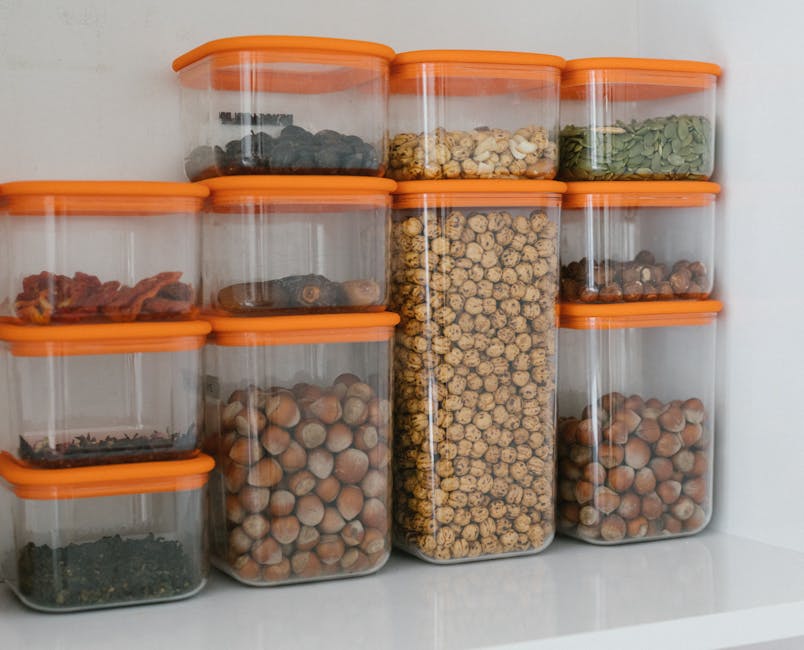
Plastic food storage containers are a significant but largely invisible source of chemical exposure. BPA (bisphenol A) made national headlines when it was linked to hormonal disruption — but the plastics that replaced it aren't necessarily safer. A 2011 study in Environmental Health Perspectives found that the majority of BPA-free plastics still leach chemicals with estrogenic activity, especially when heated or exposed to acidic foods.
Food storage is an area where the non-toxic upgrade is practical, affordable, and immediately impactful. Here's what to switch to and why.
Why Plastic Food Storage Is a Problem
The concerns with plastic food storage come from two sources:
Chemical Leaching
Plastics are not fully chemically stable — particularly under heat, UV light, or contact with acidic foods. BPA leaches from polycarbonate plastics. Phthalates leach from PVC. Antimony leaches from PET (common water bottles). Styrene from polystyrene. And "BPA-free" alternatives like BPS and BPF have been found to have similar estrogenic activity at low doses.
The NIH National Institute of Environmental Health Sciences classifies BPA as an endocrine-disrupting compound. Phthalates — plasticizers used in flexible PVC — are linked to reduced testosterone, reproductive harm, and early puberty.
Microplastics
Beyond chemical leaching, plastic containers shed microscopic particles into food and beverages. A 2020 study found that plastic bottles used for water shed millions of microplastic particles per liter. Microplastics have been detected in human blood, lung tissue, and breast milk. Long-term health effects are being studied by the NIH's NIEHS.
The Best Non-Toxic Food Storage Options
Glass — Best Overall
Pyrex Simply Store Glass Containers / Anchor Hocking
Borosilicate glass is chemically inert — it doesn't leach chemicals into food under normal use conditions, it's microwave-safe, oven-safe, and dishwasher-safe. It's the safest food storage material available and works for virtually every storage application. The main drawback: it's heavier and breakable.
- ✅ Completely inert — zero chemical leaching
- ✅ Microwave, oven, and dishwasher safe
- ✅ Lasts indefinitely — no degradation
- ✅ Can see contents — no guessing what's inside
- ❌ Heavy and breakable
- ❌ Not portable for travel or lunches
Note on lids: Most glass containers come with plastic lids. Use these for sealing storage — just don't let food directly contact the lid during storage, and don't microwave with the plastic lid on. Silicone lids are a safer alternative.
~$20–$40 (set of 3-4 containers)
Check Price →Stainless Steel — Best for Portable Storage
U-Konserve / LunchBots Stainless Steel Containers
18/8 (304) stainless steel is highly stable and doesn't leach chemicals at normal food contact temperatures. It's the best option for portable storage — lunch boxes, snack containers, travel — where glass is impractical. It's not microwave-safe, but works for cold and room-temperature foods.
- ✅ No chemical leaching at food contact temperatures
- ✅ Lightweight and shatterproof
- ✅ Excellent for children's lunches and portable storage
- ✅ Dishwasher safe
- ❌ Not microwave-safe
- ❌ Can dent with heavy impact
- ❌ Can't see contents without opening
~$15–$30 per container
Check Price →Food-Grade Silicone — Best for Flexible Storage
Stasher Reusable Silicone Bags
Food-grade silicone is stable across a wide temperature range (typically -40°F to 450°F), doesn't leach chemicals at normal conditions, and is approved by the FDA for food contact. Stasher bags are the most rigorously tested brand and effectively replace single-use plastic bags. Look for "100% food-grade silicone" — some cheaper silicone products contain fillers.
- ✅ Flexible and lightweight
- ✅ Replaces single-use plastic bags
- ✅ Microwave, dishwasher, and sous vide safe
- ✅ Doesn't leach chemicals at normal temperatures
- ❌ More expensive than zip-lock bags upfront
- ❌ Quality varies — buy 100% food-grade only
~$12–$22 per bag
Check Price →
Plastic Safety Quick Reference
If you're transitioning gradually, here's what to prioritize replacing:
- Replace immediately: Polycarbonate (#7 PC) — contains BPA. Polystyrene (#6) — leaches styrene. PVC (#3) — contains phthalates.
- Use with caution: PET (#1) — used for water bottles, antimony leaching concern especially with heat exposure. Only use cold and replace regularly.
- Lower concern: Polypropylene (#5) and HDPE (#2) — generally considered the safest plastic options for food storage. Still don't heat them.
The golden rule: never heat food in plastic. Heat dramatically increases chemical leaching from all plastic types, regardless of whether they're labeled "microwave-safe." Microwave-safe means the plastic won't melt — not that it won't leach chemicals.
Beyond food storage, reducing chemical exposure from cookware and drinking water gives you the most comprehensive reduction in daily chemical exposure.
Frequently Asked Questions
Related Resources
- Hard water filtration and water quality guides Your water supply matters as much as your materials.
Is BPA-free plastic safe for food storage?
Not necessarily. "BPA-free" plastics often use BPS, BPF, or other bisphenol alternatives with similar hormonal activity. A 2011 study found many BPA-free plastics still leach chemicals with estrogenic activity. The safest approach is to avoid plastic for hot or acidic foods and use glass or stainless steel instead.
What plastics are safest for food storage?
The safest plastics are polypropylene (#5) and high-density polyethylene (#2). Avoid PVC (#3), polystyrene (#6), and polycarbonate (#7 PC) which contains BPA. Don't use any plastic for hot foods or in the microwave — heat accelerates chemical leaching regardless of plastic type.
Can glass containers leach chemicals?
Standard borosilicate glass is essentially inert and does not leach chemicals at normal use temperatures. It's the safest food storage material available. Lead crystal (different from regular glass) can leach lead and should not be used for food storage or beverages.
Are silicone bags and containers safe for food storage?
Food-grade silicone is generally considered safe — it's stable at a wide temperature range, doesn't leach chemicals at normal temperatures, and is FDA-approved for food contact. Look for "100% food-grade silicone" — some lower-quality products contain fillers. Stasher bags are a well-regarded brand.
Get weekly guides from ToxinFreeMaterials
No spam. Unsubscribe anytime.